
In addition to concerns over monsoon shortfall and rising global commodity prices, RBI on Monday said that a hike in power tariffs could further push up inflation in the coming months.

The road ahead for the markets in the short term will depend on external factors rather than domestic developments.

A good monsoon could rein in food inflation. Largely good corporate results mean better days are ahead. Nifty may reach record levels, points out Devangshu Datta.

Claiming that their recent nationwide strike was a "big success", CPI(M) on Wednesday said it would intensify the struggle against rising prices and would not be deterred by the "politically motivated propaganda" about losses the hartal caused to the nation.

'They should decide their allocation based on their risk appetite and age, and not valuations.'

According to World Gold Council (WGC), gold jewellery demand in India, the world's largest consumer, touched record 662.1 tonnes in 2014.

10 stocks which are most popular with brokerages right now and are expected to deliver maximum upside over the next 12 months.

The monsoon session of Parliament, scheduled to begin on July 26, is expected to be a stormy one with the Bharatiya Janata Party-led Opposition seeking to pin down the Centre on issues like the hike in fuel prices and essential commodities, and Foreign Minister SM Krishna's Pakistan visit.

Overseas investors buoyed by recent rate cut by RBI and hopes of a good monsoon

Wall Street brokerage Bank of America Securities has pencilled in lower than the consensus retail inflation for the current fiscal year at 5 per cent, but higher than the previous forecast of 4.7 per cent. Stating that the June print will be critical for the future trajectory -- after the extremely high 6.3 per cent print in May, the brokerage in a report on Friday revised upwards its forecast by 30 bps to an yearly average of 5 per cent for the year to March 2022. "Though the June print will be critical for future trajectory, beyond near-term, we find some comfort from our analysis of four key factors that are likely to influence CPI inflation the most.

Food inflation further eased to 16.04 per cent for the week ended April 24, as arrival of rabi (winter) crops cooled down prices of essential items.

SBI Chairperson Arundhati Bhattacharya said any rate cut by the bank would depend on a lot many factors.
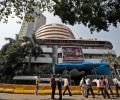
Investors will keenly watch out for the Futures & Options expiry for July on Thursday
In a statement the Sabha says that paddy cultivation has been severly affected and that the PM had not announced any hike in the Minimum Support Price for the growers, as sought by them. The Sabha also calls for the reccomendations of the MS Swaminathan Foundation on calculating MSP be implemented.

Plan your day trekking, camping, swimming, bird-watching around these spots.

Weak consumer sentiment across urban and rural markets due to slow farm inflows, subdued agri-commodity prices, rising cost of ownership as a result of regulatory changes including safety, emissions, vehicle registration, along with a rise in interest cost/EMI, have impacted demand.

Prices of food articles continued to rise over the previous week. Bajra and urad prices rose by two per cent each, and condiments and spices, arhar, and fruit and vegetables became more expensive by one per cent.

Inflation is likely to peak at 8.7 per cent by end-March and the Reserve Bank is likely to begin tightening its monetary policy from its January policy review itself, a report by Bank of America Merrill Lynch (BofAML) has said.

We have our own problems for sure and they are not trivial, but for now, our economy is in not too bad a shape, our politics is as personality-driven and authoritarian as that of most countries in the world. We must make the best of what we have and not be excessively unhappy looking at the grass on the other side of the septic tank which may not be greener after all!, observes Shreekant Sambrani.

Auto majors, including Maruti Suzuki India, Hyundai and Tata Motors, on Sunday reported high double-digit growth in their domestic passenger vehicle sales in July riding on stabilisation of macro-economic factors and better consumer sentiments. Similarly, Honda, Nissan, MG Motor and Skoda also reported healthy growth in their sales last month leveraging on improved market mood amid prevailing lower coronavirus infection rate, despite supply constraints of semi-conductors. The country's largest carmaker Maruti Suzuki India's (MSI) domestic sales increased by 39 per cent to 1,41,238 units last month as against 1,01,307 units in July 2020, the company said in a statement.

Liquidity issues post the crisis at DHFL, progress of monsoon, rupee trajectory at the domestic level and oil prices are some factors that will keep markets choppy, analysts say.

The surge in IT, auto and FMCG stocks were led by investors seeking safety against market volatility.

ICICI Bank and SBI were among the top Sensex gainers along with FMCG majors ITC and HUL.

El Nino, which refers to warmer-than-average sea surface temperatures in the central and eastern tropical Pacific Ocean, will likely to keep CPI inflation up at 8-10 per cent in the second half of 2014 and will pose a 50-70 basis point risk to this fiscal's growth expectation, the report by financial services major Bank of America Merrill Lynch said.

Slowing inflation prompted the RBI to cut the policy repurchase rate last month by 25 basis points to 6.50 percent, the lowest since 2011.

Go firefly spotting, enjoy a beach vacation or pay a visit to the menstruating goddess in Assam this month.

In a recent report, BofA-ML suggests investors to track these six event risks in July apart from the Greek drama
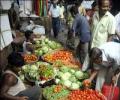
With the Budget Session starting on stormy note due to disruptions by Opposition on the issue of price rise and rail fare hike, the Parliamentary Affairs Minister said the government was ready to discuss all issues including price rise but under appropriate rules.

Monetary policy easing, coupled with the relaxation of lending rules and greater election-driven fiscal spending in the first quarter of 2019, will provide some support to growth during the first half of 2019-20 fiscal

Since its peak, the S&P BSE Sensex has dropped nearly 3,000 points.

Industrialists affirm their belief that the adverse effects of demonetisation and the goods and services tax are finally over.

As the second wave of the Covid-19 pandemic abates, India's automakers are hopeful of a quick recovery in sales volumes, led by better rural sentiment, low interest rates, improved availability of finance and a gradual uptick in business and economic activity. In fact, companies have started to ramp up production already, encouraged by high order books and the growing preference for private transport in both rural and urban areas as a means to avoid infections. In early April, the industry had been bullish as the sales trend for March showed that the effects of the Covid-19 pandemic had been left behind. The total vehicle sales had grown by 77 per cent, albeit on a lower base, and for the past few months, sales had consistently touched 300,000 units per month.

The July-September quarter GDP numbers are due on November 30.

Pressure has been mounting on the Reserve Bank of India to cut interest rates in the wake of declining retail inflation and the need to fuel growth momentum. However, the RBI will have to do a tightrope walk as globally interest rates are inching upwards.

Declining interest rates, a near-normal monsoon leading to higher rural incomes and pay hikes for central government employees are key triggers, says Dev Chatterjee.
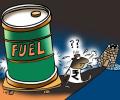
Inflation in 'fuel and power' basket rose sharply to 11.22 per cent in May from 7.85 per cent in April as prices of domestic fuel increased in line with rising global crude oil rates.

'Both IIP and CPI inflation numbers are showing a huge disconnect from the leading indicators.'

Consumer prices were forecast to have risen 10.00 per cent annually last month, barely changed from the 10.09 per cent clocked in October.

India's first quarter GDP growth print was 7.9 per cent y-o-y, primarily led by urban consumption demand
